
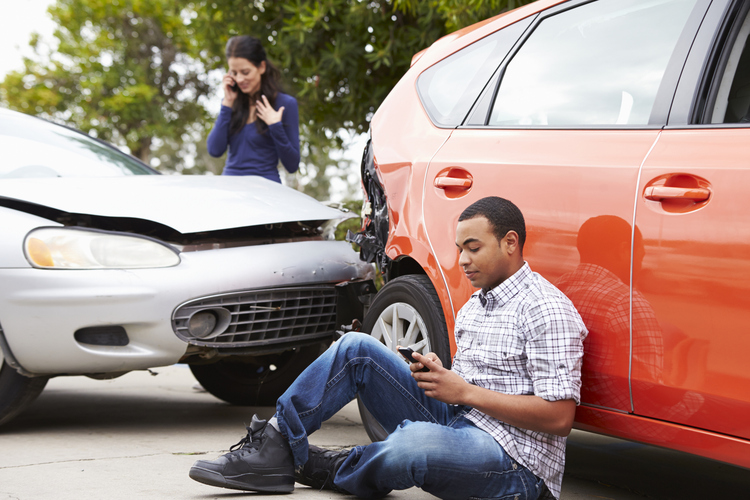
Colorado is an at-fault state for car accident claims, meaning that the driver who is more than 50% responsible for the accident must pay the damages incurred by the other party. But what happens if both drivers are equally responsible for the wreck? Claims with a 50/50 split liability quickly become complicated and contentious, as each party involved (including insurance companies) has a vested interest in proving that the other driver shoulders the bulk of the blame.
So what can you do in this situation? Your first step should be talking to an experienced Denver personal injury attorney, someone with a successful track record of resolving split liability claims and the resources to build a strong case against the other driver. Instead of fighting with the insurance company or settling for a 50/50 split liability agreement, let your lawyer build a case citing all the instances that the other party was negligent.
Colorado’s comparative negligence laws for car accident claims
Colorado uses a comparative negligence approach to determine the amount of compensation a driver who is not at fault for a road traffic accident can receive from the other driver’s insurance company. Drivers who are 51% or more responsible for the crash are considered the at-fault driver. The at-fault party cannot receive compensation from the not-at-fault driver.
However, under Colorado law, the driver receiving compensation will see their final award reduced by the amount of fault they contributed to the wreck. For example, if you are found to be 25% responsible for the wreck, and the other driver 75% responsible, then your damages will be reduced by 25%, or the amount of blame you contributed.
The law does account for instances in which both drivers are equally responsible for the wreck.
What is a 50/50 insurance claim for Colorado car accidents?
A 50/50 liability claim is when both parties in a crash are equally at fault.
For example, one driver is making a left-hand turn on a blinking green arrow, and another driver is speeding straight through the intersection. The turning driver should have waited for a full green arrow, but, thinking they had time, initiated the turn. The speeding driver would not have hit the turning driver had they not been speeding, even though they had the right-of-way.
Both drivers are partly responsible, and in situations like this, insurance companies may split liability straight down the middle.
What happens in a 50/50 car insurance claim?
In 50/50 insurance claims, each party owes the other 50% of their total material damages. This doesn’t mean that each party owes the other the same amount of money. If you’re driving a Mercedes, and an old Yugo hits you, your property damage is going to be a lot more than the other driver’s. Or, maybe you end up with a few bruises and a sprained wrist, but the other driver has a spinal cord injury and a broken leg. Their medical damages are going to be a lot more than yours.
If Driver A’s total damages are $20,000, Driver B owes them $10,000. But if Driver A’s damages are $20,000, and Driver B’s are $50,000, then Driver A owes Driver B $25,000.
You can see how this situation can become complicated. It’s in your best interest to work with a lawyer who can help shift the balance of fault in your favor or collaborate with expert witnesses, such as an economist, to reduce the proposed amount of damages the other party is requesting.
Why legal help matters in 50/50 liability claims
While a 50/50 split may seem fair on paper, it rarely reflects the full reality of the crash. Insurance companies often push equal liability to minimize their financial responsibility, even when the facts point to a different outcome. An experienced personal injury attorney can investigate your case and present evidence that helps reduce your share of fault and maximize your potential recovery.
Even if you are partly responsible, you may still be entitled to compensation for medical expenses, property damage, and pain and suffering. Don’t accept an unfavorable outcome without a fight. Call Zara Injury Law today at (866) 823-8288 or contact us online for a free consultation.